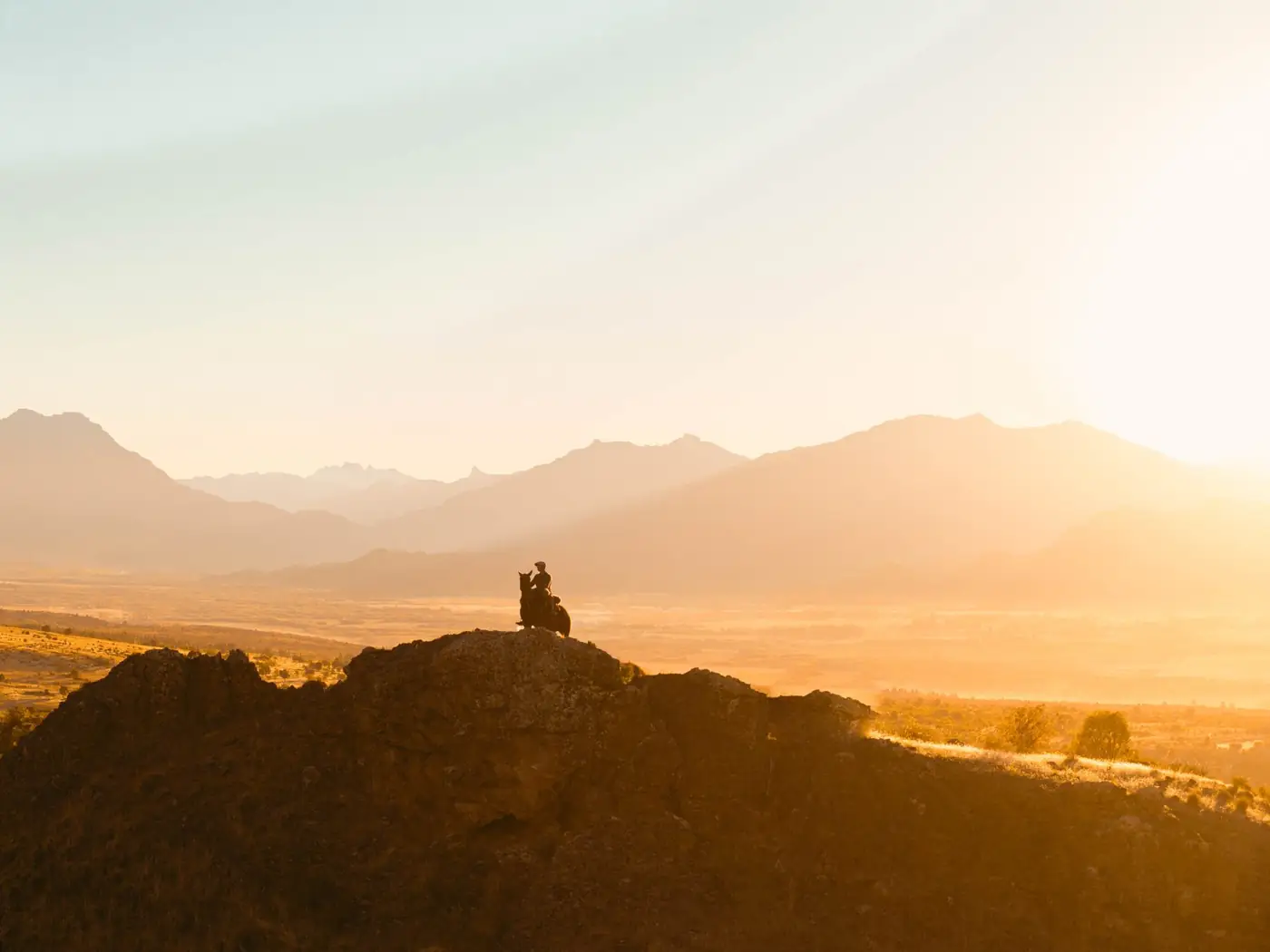
You can see Patagonia from a rental car. You can see more of it from a hiking trail. But there is a Patagonia that only opens up from the back of a horse, and once you have seen it, the other versions feel like watching the place through glass.
The reason is simple geography. Most of Patagonia has no roads and no trails. It is private estancia land and open mountain country, crossed by rivers with no bridges, and the only way through it is the way people have crossed it for two hundred years: on a criollo horse that knows where to put its feet. When you ride here you are not following a tourist route. You are moving through the working landscape of the gauchos, past their herds and their hidden valleys, sleeping where the day ends instead of where the booking confirmation says.
There is also something the horse does to you. Walking, you watch your feet. Driving, you watch the road. But riding, your eyes are free and the rhythm is steady, and after a few hours something in you unclenches. You start noticing the condors, the weather building over the peaks, the thousand colours of country you would have called brown from a car window. The gauchos have a stillness about them that I used to think was personality. After enough days in the saddle I understood it is the land itself, absorbed through years of riding through it.
I made a film about riding through Patagonia if you want to see what this looks like. And if you want to feel it instead, that is exactly what the Patagonia expedition exists for: a small group, local gauchos, real estancias and the country beyond the last road. There is no version of Patagonia I believe in more than that one.